
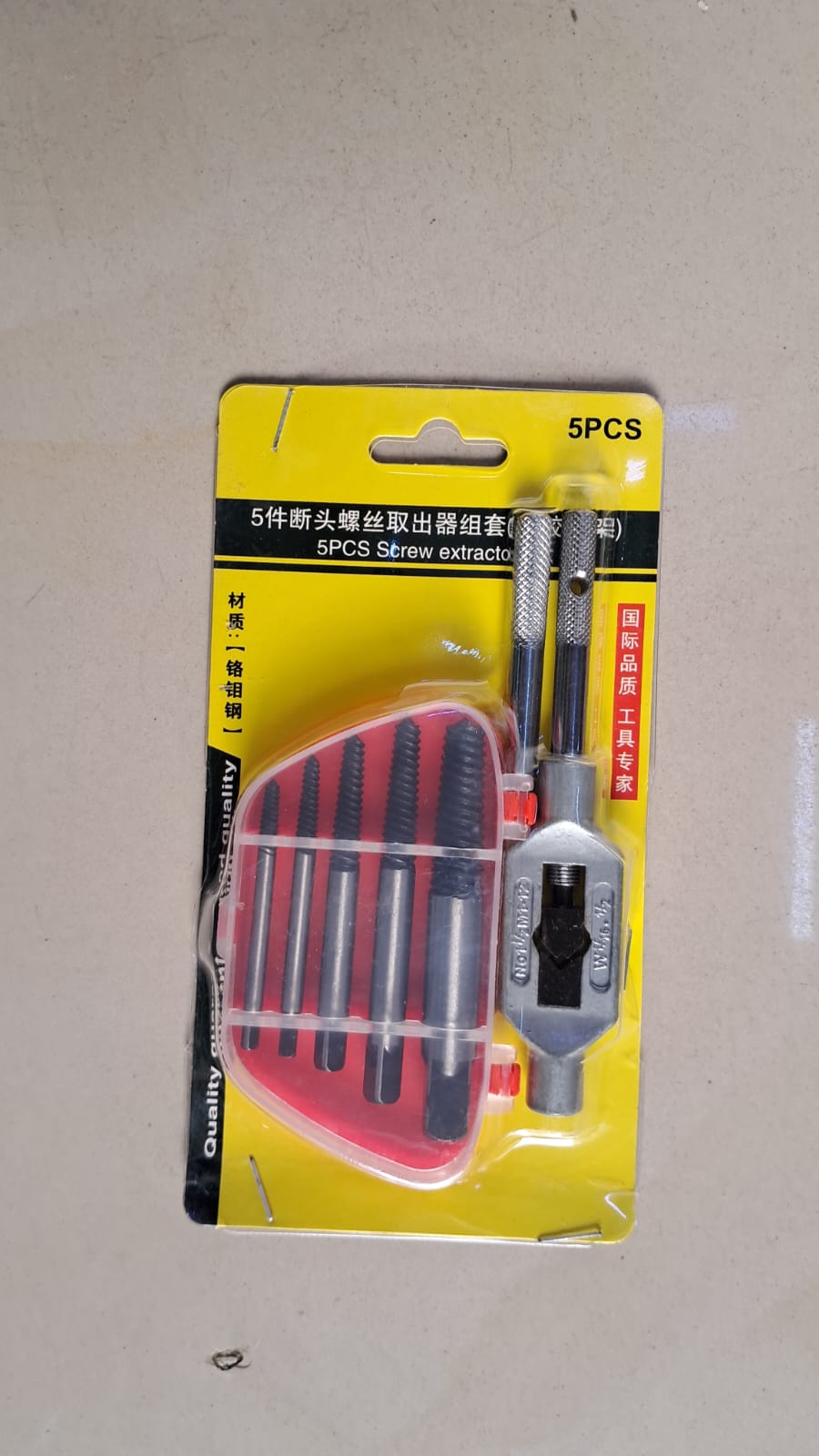
Description

A screw extractor is a specialized hand tool used to remove damaged, stripped, broken or seized screws, bolts, studs and pipe fittings that cannot be removed using ordinary screwdrivers or spanners. It is one of the most useful tools for mechanics, maintenance technicians, welders, plumbers, electricians, fabricators and DIY users.
A screw extractor works by gripping the inside of a drilled hole in the damaged fastener. Most extractors feature a left-hand spiral flute that bites into the fastener as it is turned counterclockwise, helping loosen and remove it without further damaging the surrounding material.
Quick Specifications
| Feature | Typical Specification |
|---|---|
| Product | Screw Extractor Set |
| Material | Hardened Tool Steel or High-Speed Steel |
| Extractor Type | Spiral Flute Left-Hand Thread |
| Available Sizes | #1–#5 or #1–#6 |
| Compatible Fasteners | Screws, Bolts, Studs, Pipes |
| Fastener Size Range | Approximately 3/32 inch to 7/8 inch (model dependent) |
| Drive Type | Wrench or Tap Handle |
| Storage | Plastic Case, Metal Case or Pouch |
| Application | Removing Broken Fasteners |
| Operation | Manual |
Most quality screw extractor sets include five or six extractors covering a wide range of metric and SAE fastener sizes.
Main Features of a Screw Extractor
Spiral Flute Design
The most common screw extractors use a tapered spiral flute.
When turned counterclockwise, the spiral flutes tighten their grip inside the drilled hole, allowing the damaged fastener to back out.
Advantages include:
- Strong gripping action
- Easy removal
- Reduced slipping
- Suitable for broken bolts
- Suitable for damaged screws
The spiral design works without expanding the fastener, making it particularly effective for softer materials and thin-walled components.
Hardened Steel Construction
Quality extractors are manufactured from:
- Hardened tool steel
- Heat-treated alloy steel
- High-speed steel (selected models)
Benefits include:
- High strength
- Long service life
- Wear resistance
- Improved durability
Heat treatment helps the extractor resist twisting under normal operating conditions.
Wide Size Range
Most sets contain several extractor sizes.
Typical sizes include:
- #1
- #2
- #3
- #4
- #5
- #6 (larger kits)
This allows removal of both small and large fasteners.
Suitable for Metric and SAE Fasteners
Most extractor kits can be used on:
- Metric bolts
- Metric screws
- SAE bolts
- SAE screws
- Socket head screws
- Studs
This makes them suitable for imported and locally manufactured machinery.
Easy Identification
Many professional extractors have:
- Size markings
- Recommended drill size markings
- Number identification
This helps users quickly choose the correct extractor. Some manufacturers permanently mark the required drill size on the extractor shank.
Compact Storage Case
Many kits are supplied in:
- Plastic storage case
- Blow-moulded case
- Metal box
- Protective pouch
The case keeps all extractors organised and reduces the risk of losing smaller sizes.
Typical Technical Specifications
| Specification | Typical Value |
|---|---|
| Material | Tool Steel / High-Speed Steel |
| Sizes | #1–#5 or #1–#6 |
| Thread Direction | Left-Hand Spiral |
| Suitable Fasteners | 3/32 inch–7/8 inch (model dependent) |
| Operation | Manual |
| Drive | Adjustable Wrench or Tap Wrench |
| Storage | Carrying Case |
| Heat Treatment | Yes |
| Finish | Black Oxide or Corrosion-Resistant |
What Can a Screw Extractor Remove?
A screw extractor is commonly used to remove:
- Broken screws
- Rusted bolts
- Rounded bolts
- Damaged socket screws
- Broken studs
- Pipe plugs
- Broken fittings
- Allen bolts
- Machine screws
Applications
Suitable for:
- Automotive workshops
- Engineering workshops
- Construction
- Welding shops
- Pipe installation
- Farm machinery repair
- Motorcycle repair
- Generator maintenance
- Pump repair
- Industrial maintenance
- Home DIY projects
Benefits of Using a Screw Extractor
Saves Time
Removes damaged fasteners without destroying surrounding components.
Reduces Repair Costs
Helps avoid replacing expensive engine parts or machinery.
Easy to Carry
Small enough to fit inside a toolbox.
Suitable for Professionals
Widely used by mechanics and maintenance technicians.
Works on Different Fasteners
Compatible with screws, bolts, studs and fittings.
Long Service Life
Heat-treated steel provides durability with proper use.
How to Use a Screw Extractor
Step 1
Centre-punch the broken fastener.
Step 2
Drill a hole in the centre using the recommended drill bit.
Step 3
Insert the correct size extractor.
Step 4
Turn the extractor counterclockwise using:
- Adjustable wrench
- Tap wrench
- T-handle
Step 5
Continue turning until the fastener backs out.
Avoid applying excessive force because hardened extractors can break if overloaded.
Safety Tips
- Wear safety glasses.
- Clamp the workpiece securely.
- Use the correct drill size.
- Keep the drill centred.
- Do not force the extractor.
- Use cutting oil when drilling steel.
- Avoid side loading.
- Replace damaged extractors.
- Keep hands clear while drilling.
Maintenance Tips
To keep the extractor set in good condition:
- Clean after use.
- Wipe off oil and metal chips.
- Store in the original case.
- Protect against rust.
- Inspect for wear or cracks.
- Avoid dropping onto hard surfaces.
- Lubricate lightly before storage.
Screw Extractor vs Bolt Extractor
| Feature | Screw Extractor | Bolt Extractor Socket |
|---|---|---|
| Broken Screws | Excellent | Limited |
| Broken Studs | Excellent | Limited |
| Rounded Bolt Heads | Moderate | Excellent |
| Requires Drilling | Usually Yes | No |
| Internal Grip | Yes | No |
| External Grip | No | Yes |
Many workshops keep both tools because they solve different fastener problems.
How to Choose the Best Screw Extractor Set
When buying, consider:
- Material quality
- Heat treatment
- Number of extractors
- Metric and SAE compatibility
- Storage case
- Size markings
- Drill bit compatibility
- Brand reputation
- Spare availability
Professional mechanics generally prefer hardened spiral-flute extractors because they provide stronger gripping action on broken fasteners.
Package Contents
A standard screw extractor kit may include:
- #1 Screw Extractor
- #2 Screw Extractor
- #3 Screw Extractor
- #4 Screw Extractor
- #5 Screw Extractor
- Storage case
Larger kits may also include:
- #6 extractor
- Matching drill bits
- Center punch
- Tap wrench
Package contents vary by manufacturer.
Screw Extractor Price in Kenya
Prices depend on the material, number of pieces and included accessories.
| Product | Estimated Price in Kenya |
|---|---|
| Basic 5-Piece Set | KSh 600–1,500 |
| Professional HSS Set | KSh 1,500–3,500 |
| Extractor Kit with Drill Bits | KSh 2,500–5,500 |
| Industrial Heavy-Duty Set | KSh 5,000–12,000+ |
Prices vary according to:
- Brand
- Number of extractors
- Steel quality
- Included drill bits
- Carry case
- Warranty
Why Buy a Screw Extractor Set?
A screw extractor set is an essential addition to any workshop because it allows damaged or broken screws and bolts to be removed without damaging expensive machinery or equipment. Manufactured from hardened tool steel or high-speed steel, these extractors provide excellent gripping power and long service life. They are suitable for automotive repairs, machinery maintenance, plumbing, fabrication, generator servicing and home repairs. A quality screw extractor set can save time, reduce repair costs and make difficult fastener removal much easier.
Frequently Asked Questions
What is a screw extractor used for?
It is used to remove broken, stripped or seized screws, bolts and studs.
Does a screw extractor require drilling?
Yes. Most spiral extractors require a pilot hole drilled into the damaged fastener before use.
What material is a screw extractor made from?
Most quality extractors are made from hardened tool steel or high-speed steel.
Can it remove broken bolts?
Yes. Screw extractors are commonly used for removing broken bolts, studs and pipe fittings.
Can it be used on stainless steel bolts?
Yes, provided the correct drill bit and extractor size are used, though heavily seized stainless fasteners may require extra care.
What tools are needed?
Typically:
- Drill
- Correct drill bit
- Center punch
- Adjustable wrench or tap wrench
- Cutting oil
Can an extractor break?
Yes. Applying excessive torque or using the wrong size extractor can cause it to break. Hardened extractors should be used carefully.
Is a screw extractor reusable?
Yes. With proper use and maintenance, a quality extractor can be reused many times.
What sizes are included?
Most kits include #1 to #5, while larger sets include #1 to #6 for a wider range of fastener sizes.
What is the price of a screw extractor in Kenya?
Most screw extractor sets sell for approximately KSh 600 to KSh 5,500, while premium industrial kits can cost more depending on the brand and accessories included.
Reviews
There are no reviews yet.