
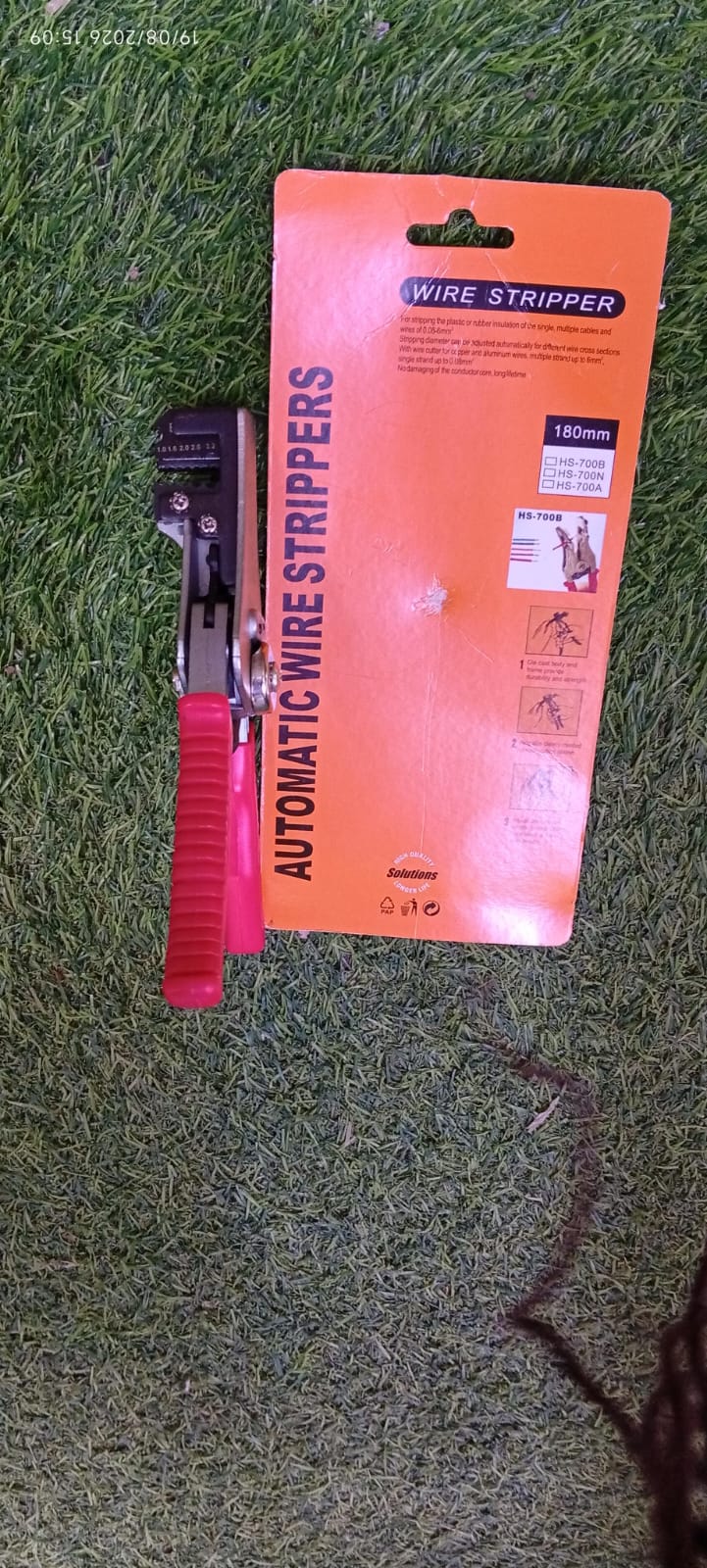
Description
An Automatic Wire Stripper is a multipurpose electrical hand tool designed to remove insulation from electrical wires quickly without damaging the conductor underneath. Unlike traditional wire stripping pliers that require the user to select a specific hole for every cable size, the self-adjusting mechanism automatically grips the wire and separates the insulation when the handles are squeezed.
Common professional models handle approximately 0.2–6 mm² or 24–10 AWG wire. Many automatic wire strippers also combine three functions in one tool: stripping, cutting and terminal crimping.
This makes the tool useful for electricians, solar installers, automotive technicians, electronics repair technicians, CCTV installers and DIY users in Kenya.
Automatic Wire Stripper Specifications
| Feature | Typical Specification |
|---|---|
| Product Name | Automatic Wire Stripper |
| Tool Type | Self-Adjusting Wire Stripping Pliers |
| Stripping Range | 0.2–6 mm² / 24–10 AWG |
| Cutting Range | Up to 6 mm² on some models |
| Insulated Terminal Crimping | 0.5–6 mm² |
| Non-Insulated Crimping | Model Dependent |
| Mechanism | Automatic Self-Adjusting |
| Stripping Length | Adjustable Stop |
| Fine Adjustment | Tension/Pressure Adjustment Knob |
| Jaw Material | Hardened Tool Steel |
| Handle | Ergonomic PP/TPR Grip |
| Main Functions | Strip, Cut and Crimp |
Specifications vary between models. For example, professional automatic strippers are available with ranges from 0.14–6 mm², 0.2–6 mm² and 0.5–6 mm².
Automatic Self-Adjusting Mechanism
The biggest advantage of this tool is the automatic stripping mechanism.
Place the wire between the jaws and squeeze the handles. The jaws grip the insulation while the stripping mechanism pulls it away from the conductor.
This reduces the need to manually match each cable to a stripping slot and makes repetitive electrical work considerably faster.
0.2–6 mm² Stripping Capacity
A common general-purpose automatic wire stripper handles wires from:
0.2 mm² to 6 mm², approximately 24 AWG to 10 AWG.
This range makes the tool useful for many common electrical jobs involving:
- House wiring
- Automotive wiring
- Solar installations
- Control panels
- CCTV systems
- Electrical appliances
- Electronics
- Low-voltage systems
Always confirm that the particular wire and insulation type are compatible with the stripper.
Built-In Wire Cutter
Many automatic wire strippers include an integrated cutter, eliminating the need to carry separate cutting pliers for smaller conductors.
Some models are rated to cut conductors throughout the same 0.2–6 mm² range, while other professional stripping tools specify smaller cutting capacities.
The exact cutting capacity should therefore be checked on the specific model.
Built-In Crimping Function
Multipurpose models also include terminal crimping sections.
A typical tool can crimp insulated terminals from approximately:
0.5–6 mm² or 22–10 AWG.
Selected models also provide separate positions for non-insulated terminals.
This makes one tool useful for:
- Cutting the wire
- Removing insulation
- Installing and crimping the terminal
Adjustable Stripping Length
An adjustable wire stop allows you to determine how much insulation will be removed.
This feature is especially useful when preparing several wires that need the same exposed conductor length.
Professional automatic wire strippers use adjustable stops specifically to provide repeatable stripping lengths during batch work.
Stripping Pressure Adjustment
Different insulation materials have different hardness and thickness.
The adjustment knob found on many models allows the stripping force to be increased or reduced according to the cable.
This can improve performance when working with:
- Thin insulation
- Thick insulation
- Soft insulation
- Harder PVC insulation
Hardened Steel Stripping Jaws
Quality models use hardened tool-steel blades or jaws to maintain accurate cutting performance.
For example, some self-adjusting models use Cr12MoV steel jaws, while professional Knipex models use oil-hardened special tool-steel blades.
Good blade quality helps provide clean insulation removal while reducing conductor damage.
Comfortable Ergonomic Handle
Automatic stripping involves repeated squeezing, especially when preparing many cables.
For this reason, many models feature PP and TPR handles that provide:
- Comfortable grip
- Better tool control
- Reduced hand fatigue
- Improved slip resistance
A typical multipurpose automatic stripper measures around 205–216 mm long and weighs approximately 0.27–0.30 kg, although compact and heavier models are also available.
Applications
Electrical Installation
Useful for preparing wires for:
- Sockets
- Switches
- Lighting
- Distribution boards
- Electrical equipment
Solar Installation
A useful addition to a solar technician’s toolbox for preparing suitable conductors used in:
- Solar lighting
- Controllers
- Inverters
- Battery systems
- DC electrical installations
For dedicated PV cable and MC4 work, use tools specifically rated for the particular solar cable and connector.
Automotive Electrical Work
Suitable for:
- Car wiring
- Lights
- Relays
- Accessories
- Audio systems
- Battery accessories
CCTV Installation
Useful when preparing suitable low-voltage conductors for CCTV power and related installation work.
Electronics Repair
The tool can be used on compatible smaller wires when repairing:
- Appliances
- Electrical equipment
- Control systems
- Electronic projects
Automatic Wire Stripper vs Manual Wire Stripper
| Feature | Automatic Wire Stripper | Manual Wire Stripper |
|---|---|---|
| Wire Adjustment | Self-Adjusting | Usually Manual |
| Stripping Speed | Fast | Moderate |
| Repetitive Work | Excellent | Good |
| Adjustable Length Stop | Common | Less Common |
| Built-In Crimper | Common on Multipurpose Models | Model Dependent |
| Ease of Use | Excellent | Good |
Why Choose an Automatic Wire Stripper?
For electricians who prepare many cables every day, speed matters.
The automatic mechanism helps:
- Reduce stripping time
- Produce consistent results
- Reduce conductor damage when correctly adjusted
- Improve productivity
- Reduce repetitive hand work
- Keep stripping lengths consistent
How to Use an Automatic Wire Stripper
Step 1
Switch off and isolate the electrical circuit.
Step 2
Place the end of the wire between the stripping jaws.
Step 3
Use the adjustable stop to select the required stripping length.
Step 4
Adjust stripping pressure if necessary.
Step 5
Squeeze the handles completely.
Step 6
Allow the mechanism to grip the wire and remove the insulation.
Step 7
Inspect the conductor to make sure it has not been nicked or damaged.
How to Crimp a Terminal
If your automatic stripper includes a crimper, first strip the required amount of insulation.
Insert the stripped conductor into the correct terminal.
Place the terminal into the correct crimping section according to its size.
Squeeze the handles firmly.
Inspect the finished connection and gently pull the wire to confirm that it is secure.
For critical electrical connections, use the correct dedicated crimping tool and terminal specified for the application.
Important Safety Information
An ordinary automatic wire stripper should not be assumed to be electrically insulated.
For example, Knipex specifically identifies some automatic stripping models as not 1000V insulated and warns users not to use them on live circuits.
For safe use:
- Disconnect power before stripping wires.
- Never work on live circuits with a non-insulated tool.
- Wear suitable eye protection.
- Keep fingers away from the blades.
- Use the correct stripping capacity.
- Do not use the cutter on steel wire unless the manufacturer approves it.
- Inspect the tool before use.
Wires Suitable for Automatic Stripping
Depending on the model, automatic strippers can handle solid, stranded or flexible copper and aluminium conductors with compatible insulation.
Some professional models are specifically designed for solid and flexible conductors between 0.2 and 6 mm², including PVC-insulated cables
Do not assume that the tool can strip:
- Armoured cable
- Steel wire
- Very thick cable jackets
- Coaxial cable
- Fibre optic cable
- Every type of solar cable
Special cables often require dedicated stripping tools.
Maintenance
Automatic wire strippers require little maintenance.
For longer tool life:
- Clean the jaws after use.
- Remove insulation pieces from the mechanism.
- Keep the tool dry.
- Check the blades for wear.
- Inspect the return spring.
- Store the stripper in a toolbox.
- Replace worn blades where replacements are available.
Some professional models are designed with replaceable stripping blades, extending the useful life of the tool.
How to Choose the Best Automatic Wire Stripper
When buying an automatic wire stripper in Kenya, check:
- Stripping range
- Cable types supported
- Cutting capacity
- Crimping capacity
- Blade quality
- Adjustable stripping stop
- Tension adjustment
- Handle comfort
- Availability of replacement blades
- Build quality
For general electrical and automotive applications, a 0.2–6 mm² self-adjusting stripper provides a useful working range.
Why Buy an Automatic Wire Stripper?
An Automatic Wire Stripper combines speed, accuracy and convenience in a compact hand tool. Instead of manually selecting stripping holes for every cable size, its self-adjusting jaws adapt to a range of conductors.
Models combining stripping, cutting and crimping are particularly useful because they reduce the number of individual tools electricians need to carry.
Whether you work in electrical installation, automotive wiring, solar installation, CCTV or equipment repair, an automatic wire stripper can make cable preparation faster and more consistent.
Frequently Asked Questions
What is an automatic wire stripper?
An automatic wire stripper is a hand tool that grips a wire and removes its insulation automatically when the handles are squeezed.
What wire sizes can it strip?
A common multipurpose model handles approximately 0.2–6 mm² or 24–10 AWG.
Can it cut wires?
Yes. Many automatic wire strippers include an integrated wire cutter. Cutting capacity depends on the specific model.
Can it crimp terminals?
Many multipurpose models can crimp insulated terminals from approximately 0.5–6 mm² and may also have positions for non-insulated terminals.
Does it damage copper wires?
A correctly adjusted quality stripper is designed to remove insulation while leaving the conductor intact. Precision blade designs and clamping systems are specifically used to reduce conductor damage.
Is it suitable for electricians?
Yes. It is useful for professional electricians because it speeds up repetitive cable preparation and provides consistent stripping lengths.
Can I use an automatic wire stripper for solar installation?
Yes, for compatible conductors within its specified range. Dedicated PV cables and connectors may require specialized solar stripping and crimping tools.
Can I use it on a live electrical wire?
No. Unless the exact tool is certified for live electrical work, switch off and isolate the circuit first. Standard automatic wire strippers should not be assumed to provide electrical insulation.
What is the best stripping range for general use?
A 0.2–6 mm² (24–10 AWG) range is versatile for many general electrical, automotive and DIY wiring applications.
Reviews
There are no reviews yet.