
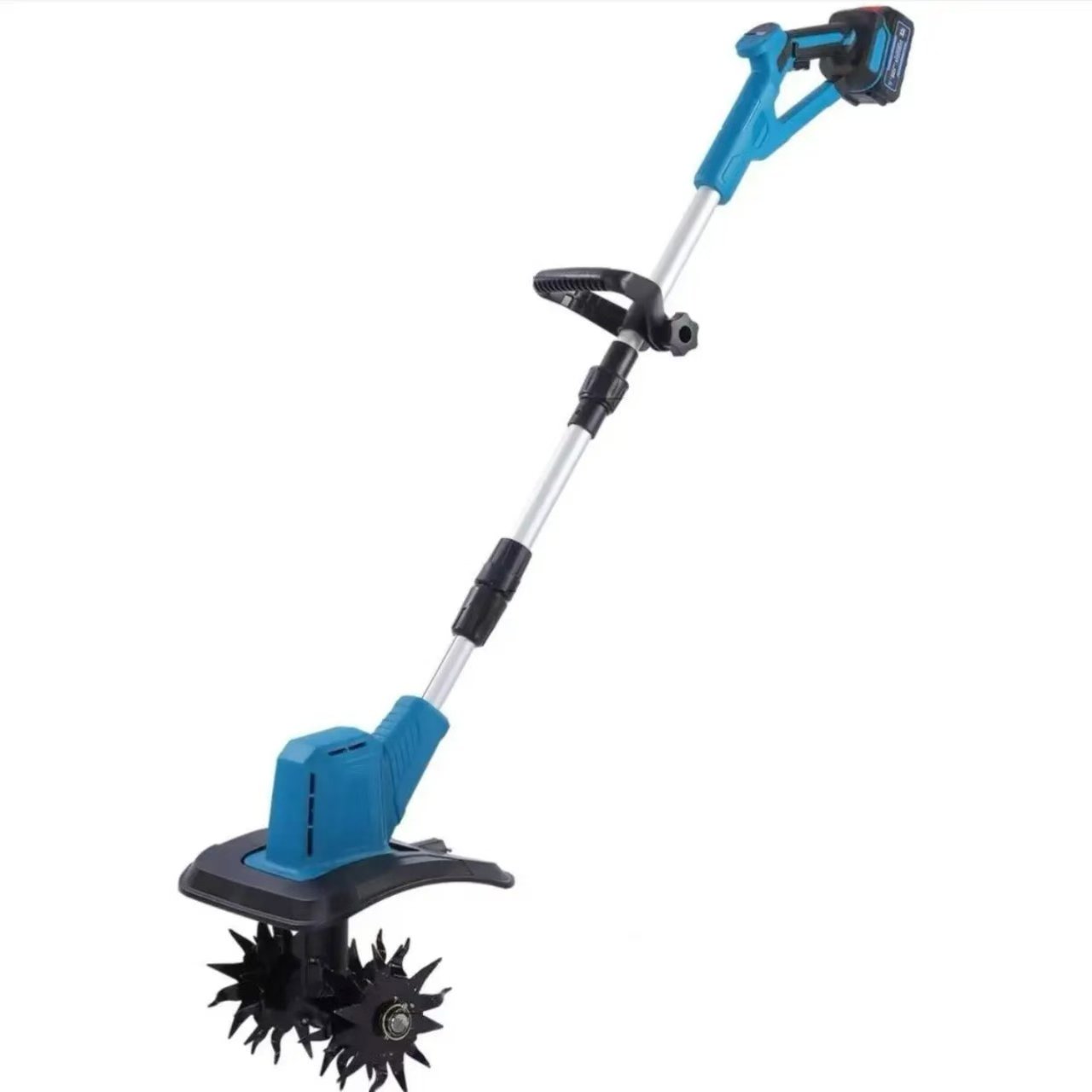
Description

A cordless tiller in Kenya is a rechargeable garden machine used to loosen soil, remove young weeds, mix compost and prepare seedbeds without using petrol or a power cable. It is ideal for vegetable gardens, flower beds, greenhouses, nurseries, small farms and landscaped compounds.
The machine uses rotating steel tines to break up the upper layer of soil. Since it runs on a lithium-ion battery, the operator can work in areas where electricity is unavailable without dealing with petrol, engine oil, fumes or extension cables.
Most handheld cordless tillers use an 18V or 20V battery, while larger wheeled models may operate on 36V or 40V battery systems. Working width and depth depend on the size of the machine. Compact models commonly cultivate about 20 to 25cm wide, while larger cordless units can cover approximately 35cm in one pass.
Quick Overview
| Feature | Typical Specification |
|---|---|
| Product type | Cordless garden tiller or cultivator |
| Battery system | 18V, 20V, 36V or 40V lithium-ion |
| Battery capacity | Commonly 2.0Ah to 4.0Ah |
| Motor type | Brushed or brushless |
| Tine speed | Approximately 250 to 360 RPM on handheld models |
| Working width | About 200 to 350mm |
| Maximum working depth | About 150 to 220mm |
| Tine material | Hardened or reinforced steel |
| Number of tine groups | Usually 4 |
| Handle | Adjustable or telescopic |
| Safety system | Lock-off switch and trigger |
| Recommended use | Small farms, gardens and seedbeds |
| Power supply | Rechargeable battery |
| Fuel required | No |
These are common market specifications rather than the specification of one single brand. For example, a 20V handheld cultivator may offer a 200mm width and 160mm depth, while a larger 40V brushless model can reach a working width of around 350mm and depth of about 205mm.
Main Features of a Cordless Tiller
Rechargeable lithium-ion battery
The cordless tiller is powered by a rechargeable lithium-ion battery. This eliminates the need for petrol and allows the machine to work far from an electrical socket.
Common options include:
- One 18V or 20V battery for compact handheld cultivators
- Two 20V batteries working together on larger 40V machines
- Battery capacities from about 2.0Ah to 4.0Ah
- Standard or fast battery chargers
- Interchangeable batteries on compatible tool platforms
A battery with a higher amp-hour rating normally provides longer working time, although runtime also depends on soil hardness, working depth, tine condition and operator technique.
Strong rotating steel tines
The lower section contains curved steel blades that rotate through the soil. They help break compacted topsoil, uproot young weeds and mix organic matter into garden beds.
Some handheld models operate at roughly 250 to 360 revolutions per minute, providing enough speed for light and medium garden cultivation.
Adjustable working handle
Many cordless tillers have a telescopic shaft or adjustable auxiliary handle. This allows the operator to set a more comfortable working height.
An adjustable handle helps:
- Reduce bending
- Improve machine control
- Reduce back strain
- Make the tiller easier to transport
- Support users of different heights
Compact working width
A compact cordless tiller can pass between vegetable rows and around existing plants more easily than a large petrol cultivator.
Handheld models may offer a working width of approximately 200 to 250mm, while wheeled cordless tillers may reach about 350mm.
Useful cultivation depth
Depending on the model and soil condition, a cordless tiller may cultivate approximately 150 to 220mm deep.
It is better to make several gradual passes than to force the machine to maximum depth immediately. The first pass should loosen the surface before deeper cultivation begins.
Safety lock and trigger switch
Most cordless cultivators use a two-stage starting system. The operator presses a safety lock before pulling the trigger. This reduces the chance of accidental startup.
Other safety features may include:
- Protective tine guard
- Overload protection
- Battery isolation during storage
- Ergonomic grip
- Instant stop after releasing the trigger
Some larger brushless models automatically stop when their tines strike a hard obstruction, helping protect the motor and blades.
Lightweight construction
Cordless tillers are lighter and easier to move than many petrol tillers. A compact handheld model may weigh around 4.5kg, although larger wheeled machines are heavier.
This makes the machine practical for home gardeners, greenhouse operators and people maintaining small plots.
What Is a Cordless Tiller Used For?
Preparing vegetable gardens
The rotating tines loosen the soil before planting vegetables such as kale, spinach, onions, tomatoes, carrots and cabbages.
Loose soil allows roots to spread more easily and improves the movement of water and air.
Mixing manure and compost
A cordless cultivator can mix mature manure, compost, peat or fertilizer into already loosened soil. Some manufacturer instructions specifically identify mixing compost and soil amendments as a suitable use.
Controlling young weeds
The rotating tines uproot small weeds growing between rows or on open garden beds.
It works best before weeds become large and develop strong roots.
Aerating compacted topsoil
Repeated watering, foot traffic and drying can create a hard upper layer. The tiller breaks this crust and allows water and oxygen to penetrate more easily.
Preparing flower beds
Its compact size makes it suitable for preparing flower beds and landscaping areas where a larger machine would be difficult to control.
Cultivating greenhouse soil
A cordless tiller produces no petrol fumes and has no electrical cable trailing behind it. This makes it convenient for covered growing areas, subject to proper ventilation and safe working practices.
Mixing soil before planting seedlings
The machine can create a finer planting bed for vegetable seedlings, flowers and herbs after stones, roots and large debris have been removed.
Advantages of a Cordless Tiller
No petrol or engine oil
A battery tiller does not require fuel mixing, carburettor cleaning, spark-plug replacement or engine-oil changes.
Easy starting
The operator inserts the charged battery, presses the safety button and pulls the trigger. There is no recoil rope to pull.
Low operating noise
Cordless machines normally operate more quietly than petrol tillers, making them suitable for residential compounds and small gardens.
No harmful exhaust fumes
The machine does not produce direct exhaust gases during operation.
Easy movement
There is no electrical cable limiting movement or creating a risk of being cut by the tines.
Lower routine maintenance
The main maintenance tasks involve cleaning the tines, checking fasteners, maintaining the battery and inspecting the safety guard.
Convenient storage
Many models have telescopic or foldable handles, making them easier to store in a workshop, garage or garden shed.
Cordless Tiller Compared with a Petrol Tiller
| Feature | Cordless tiller | Petrol tiller |
|---|---|---|
| Starting | Push button or trigger | Recoil or electric start |
| Fuel | Not required | Petrol required |
| Noise | Lower | Higher |
| Maintenance | Relatively low | More engine maintenance |
| Weight | Usually lighter | Usually heavier |
| Best area | Small and medium gardens | Medium and large farms |
| Hard virgin soil | Limited capability | Better capability |
| Runtime | Limited by battery charge | Limited by fuel supply |
| Indoor or greenhouse convenience | Better | Less suitable due to fumes |
| Transport | Easier | More difficult |
A cordless tiller is best for previously cultivated soil, garden beds and light to medium soil preparation. A heavy petrol or diesel tiller is generally more suitable for large acreage, virgin ground, dense roots and very hard soil.
Important Limitations
A cordless garden tiller is not designed to replace a walking tractor or large agricultural rotavator.
Avoid using it in:
- Soil containing many large stones
- Thick tree roots
- Extremely dry and hard ground
- Waterlogged or muddy soil
- Large virgin farmland
- Areas containing buried cables or irrigation pipes
Manufacturer guidance for cordless tillers also warns against working extremely dry or excessively wet soil.
Water very dry ground lightly and allow the moisture to settle before cultivation. For wet soil, wait until it drains enough to crumble rather than stick heavily to the tines.
Typical Cordless Tiller Package
A complete package may include:
- Cordless tiller body
- Steel tine assembly
- One or two lithium-ion batteries
- Battery charger
- Adjustable auxiliary handle
- Tine guard
- Assembly tools
- User manual
Some machines are sold as tool only, meaning the battery and charger must be purchased separately. Buyers should confirm the package contents before ordering.
How to Use a Cordless Tiller Safely
Inspect the working area
Remove stones, wire, glass, pieces of metal, thick branches and other objects that could damage the tines or be thrown outward.
Check for hidden services
Confirm that there are no buried electrical cables, water pipes or irrigation tubes in the cultivation area.
Wear protective equipment
Use:
- Safety boots
- Eye protection
- Gloves
- Long trousers
- Hearing protection where necessary
Install a fully charged battery
Make sure the battery locks firmly into position. Do not use a cracked, swollen or wet battery.
Hold the machine with both hands
Keep a stable stance and allow the tines to reach their operating speed before entering the soil.
Begin with a shallow pass
Do not push the machine deeply into hard ground during the first pass. Gradually increase the depth as the soil loosens.
Remove the battery before cleaning
Always disconnect the battery before touching the tines, removing tangled roots or carrying out maintenance.
Maintenance Tips
Clean the tines after use
Remove soil, grass and roots before they harden around the tine shaft.
Do not spray water directly into the motor housing or battery compartment.
Inspect the blades
Check for bent, cracked or excessively worn tines. Damaged tines can create vibration and uneven cultivation.
Tighten loose fasteners
Regular vibration may loosen nuts and bolts. Inspect the tine assembly, handle and safety guard before use.
Care for the battery
- Use the recommended charger
- Keep the battery dry
- Avoid leaving it in direct sunlight
- Do not store it fully discharged
- Allow a hot battery to cool before charging
- Keep the contacts clean
Store the machine correctly
Remove the battery and keep the tiller in a dry, secure location away from children.
How to Choose the Best Cordless Tiller in Kenya
Consider the size of your garden
A compact 18V or 20V cultivator is suitable for flower beds, vegetable rows and small compounds.
For a wider garden, consider a 36V or 40V wheeled model with a wider cultivation path.
Check battery capacity
A 4.0Ah battery generally offers longer working time than a 2.0Ah battery under similar conditions.
A package with two batteries can reduce downtime because one battery can charge while the other is in use.
Compare working width
A narrow machine is easier to guide between planted rows. A wider model finishes open garden beds faster.
Check maximum working depth
Choose sufficient depth for the crops and soil preparation required. Compact machines commonly reach around 160mm, while larger cordless tillers may reach approximately 205 to 220mm.
Look for a brushless motor
A brushless motor usually provides better efficiency, lower maintenance and improved motor life compared with a traditional brushed motor.
Confirm spare parts and battery availability
Check whether replacement tines, batteries and chargers are available locally. A machine is less useful when its battery system cannot be replaced.
Confirm what is included
Do not assume that every advertised tiller includes a battery and charger. Some listings are for the bare machine only.
Cordless Tiller Price in Kenya
Current Kenyan listings show rechargeable cordless tillers around KSh 12,999 to KSh 13,499 for compact locally advertised machines. Imported or larger branded cordless tillers can cost considerably more, with some online imported units listed at about KSh 49,554 before considering the exact package and delivery terms.
| Cordless tiller category | Estimated price in Kenya |
|---|---|
| Compact tool-only cultivator | KSh 10,000–15,000 |
| Cordless tiller with battery and charger | KSh 13,000–25,000 |
| Twin-battery or brushless model | KSh 25,000–45,000 |
| Larger imported 36V or 40V tiller | KSh 45,000 and above |
Prices vary according to battery capacity, working width, motor type, included accessories, brand, warranty and delivery charges. Buyers should confirm the current selling price before placing an order.
Why Buy a Cordless Tiller in Kenya?
A cordless tiller in Kenya is a practical choice for gardeners who want faster soil preparation without the weight and maintenance of a petrol machine. It is portable, simple to start and suitable for working between vegetable rows, inside greenhouses and around landscaped areas.
It is especially useful for:
- Home gardening
- Kitchen gardens
- Seedling nurseries
- Greenhouses
- Small vegetable farms
- Flower growers
- Landscaping businesses
- Schools and institutions
For the best results, use it on soil that has already been cultivated or softened. It is a cultivator for regular garden maintenance, not a replacement for a heavy-duty tractor or large power tiller.
Frequently Asked Questions
What is a cordless tiller used for?
It is used to loosen garden soil, remove young weeds, aerate seedbeds and mix compost or fertilizer into the soil.
Can a cordless tiller dig hard soil?
It can handle light to moderately compacted soil. Extremely hard, rocky or virgin ground may require a petrol tiller or several shallow passes after the soil has been softened.
How deep can a cordless tiller cultivate?
Depending on the model, typical cultivation depth ranges from about 150mm to 220mm.
What battery does a cordless tiller use?
Compact models normally use an 18V or 20V lithium-ion battery. Larger versions may use two 20V batteries to create a 40V system.
How long does the battery last?
Runtime depends on battery capacity, soil condition and working depth. Hard soil and deep cultivation consume power faster than light surface cultivation.
Can it remove weeds?
Yes. It can uproot young weeds and disturb shallow roots. Large weeds and thick roots should be removed manually before tilling.
Is a cordless tiller suitable for a large farm?
It is best suited to small gardens, vegetable beds, greenhouses and light cultivation. A petrol or diesel tiller is more suitable for large acreage.
Does it come with a battery and charger?
Some packages include one or two batteries and a charger, while others are sold as tool-only units. Always check the package description.
What is the price of a cordless tiller in Kenya?
Compact rechargeable models are currently advertised locally at approximately KSh 12,999 to KSh 13,499, while larger and imported machines can cost significantly more.
Reviews
There are no reviews yet.