
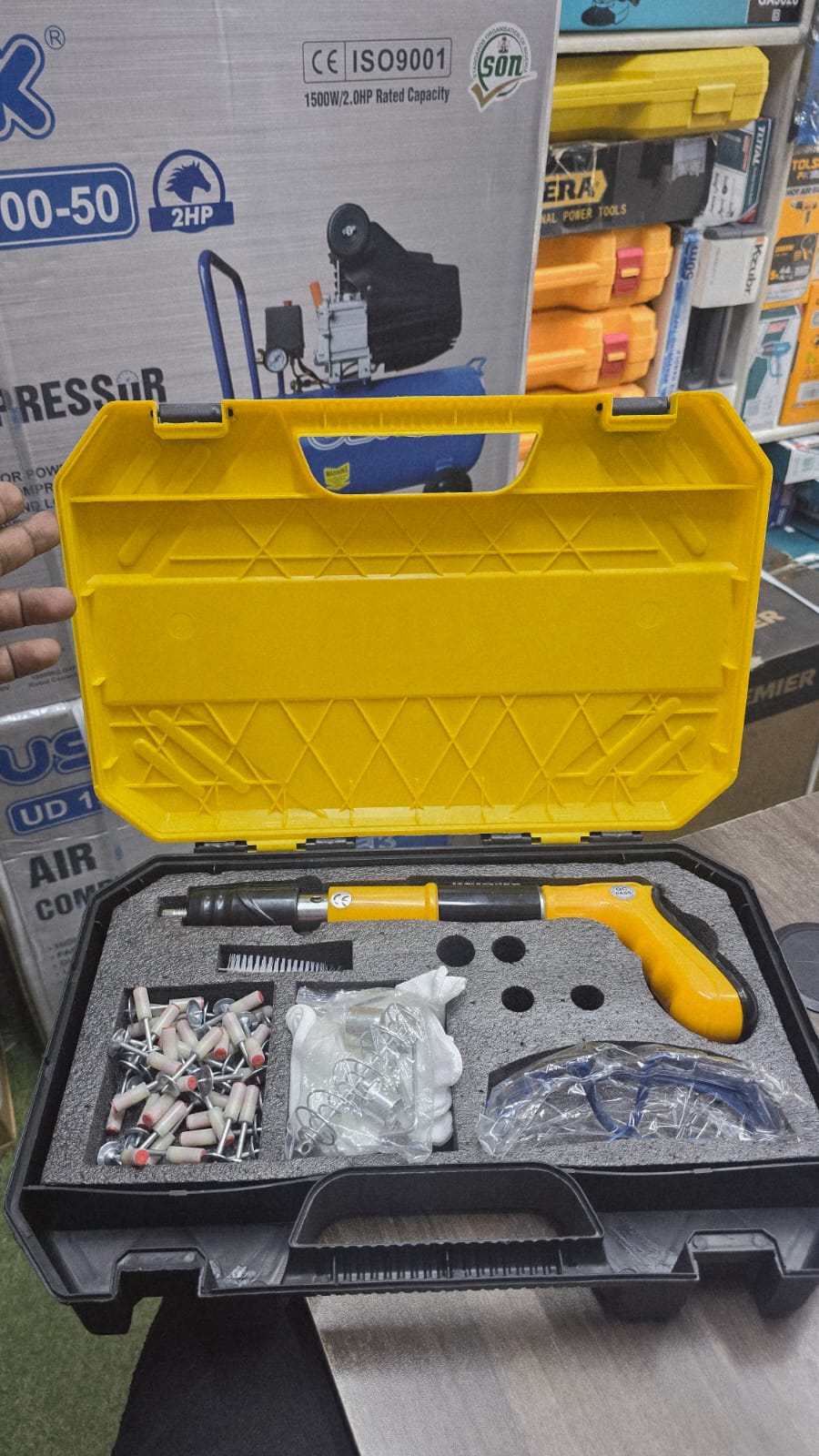
Description


A nailer gun, also known as a nail gun, is a power tool designed to drive nails into wood, timber, plywood, MDF, drywall and other construction materials quickly and accurately. It is widely used in carpentry, furniture making, roofing, flooring, framing, pallet manufacturing and interior finishing.
Compared to using a traditional hammer, a nailer gun significantly increases productivity, reduces operator fatigue and provides consistent nail placement. Nailer guns are available in pneumatic (air-powered), cordless battery-powered and electric models to suit different applications.
Whether you are a professional contractor, carpenter or DIY enthusiast, a quality nailer gun helps complete projects faster while delivering clean and secure fastening.
Quick Specifications
| Feature | Typical Specification |
|---|---|
| Product Name | Nailer Gun |
| Power Source | Pneumatic, Cordless or Electric |
| Nail Types | Brad Nails, Finish Nails, Framing Nails, Roofing Nails |
| Nail Length | 15 mm to 90 mm (model dependent) |
| Magazine Capacity | 80–300 Nails |
| Operating Pressure (Pneumatic) | 70–120 PSI |
| Trigger Type | Sequential or Contact Fire |
| Housing Material | Aluminium Alloy and Reinforced Composite |
| Handle | Rubber Over-Mould Grip |
| Weight | 1.2–4.0 kg (model dependent) |
Main Features
Fast and Efficient Nail Driving
A nailer gun drives nails much faster than manual hammering, making it ideal for projects requiring hundreds of fasteners.
Benefits include:
- Faster work completion
- Improved accuracy
- Reduced physical effort
- Consistent nail depth
- Increased productivity
Durable Construction
Most professional nailers feature:
- Aluminium alloy body
- Hardened steel driver blade
- Heavy-duty magazine
- Reinforced internal components
These materials improve durability and extend service life.
Adjustable Nail Depth
Many nailer guns include a tool-free depth adjustment feature that allows users to control how deeply nails are driven into the material.
This helps achieve a clean finish on different types of wood.
Comfortable Ergonomic Handle
The rubber-coated grip provides:
- Better control
- Comfortable operation
- Reduced vibration
- Improved handling during extended use
Quick-Loading Magazine
The magazine is designed for fast nail loading and smooth feeding, reducing downtime during work.
Safety Trigger System
Modern nailers incorporate safety mechanisms that help reduce accidental firing.
Common trigger options include:
- Sequential fire for controlled operation
- Contact (bump) fire for high-speed fastening
Always follow the manufacturer’s safety instructions.
Exhaust Direction Control
Many pneumatic models feature an adjustable exhaust that directs air away from the operator.
Jam Clearing Mechanism
Selected models include a quick-access nose design that makes it easier to clear nail jams and resume work.
Types of Nailer Guns
Brad Nailer
Suitable for:
- Furniture
- Trim work
- Decorative moulding
- Cabinets
Typically uses 18-gauge brad nails.
Finish Nailer
Designed for:
- Door frames
- Window trim
- Skirting boards
- Interior finishing
Usually uses 15-gauge or 16-gauge finish nails.
Framing Nailer
Ideal for:
- House framing
- Timber structures
- Deck construction
- Wooden fencing
Handles larger framing nails for structural applications.
Roofing Nailer
Used for installing:
- Roofing shingles
- Roofing felt
- Waterproof membranes
Flooring Nailer
Designed for installing:
- Hardwood flooring
- Tongue-and-groove flooring
- Engineered wood flooring
Applications
A nailer gun is widely used in:
Carpentry
For assembling:
- Furniture
- Cabinets
- Shelves
- Wooden frames
Construction
Suitable for:
- Timber framing
- Roof structures
- Wall framing
- Decking
Interior Finishing
Ideal for installing:
- Skirting boards
- Door trims
- Window trims
- Decorative mouldings
Upholstery
Useful for securing wood components in furniture manufacturing.
Pallet Manufacturing
Speeds up the assembly of wooden pallets and crates.
Advantages
- Faster than hammering
- Accurate nail placement
- Professional finish
- Reduces operator fatigue
- Improves productivity
- Easy to operate
- Durable construction
- Suitable for various nail sizes
- Low maintenance
- Available in pneumatic, cordless and electric models
Pneumatic vs Cordless Nailer Gun
| Feature | Pneumatic | Cordless |
|---|---|---|
| Power Source | Air Compressor | Rechargeable Battery |
| Portability | Requires Air Hose | Excellent |
| Power Output | Very High | High |
| Maintenance | Moderate | Low |
| Best For | Workshops and Construction Sites | Mobile Jobs and Repairs |
How to Use a Nailer Gun
Step 1
Wear safety glasses and hearing protection.
Step 2
Load the correct nails into the magazine.
Step 3
Connect the air hose or install the battery, depending on the model.
Step 4
Adjust the nail depth if required.
Step 5
Place the nose firmly against the workpiece.
Step 6
Press the safety contact tip and pull the trigger.
Step 7
Inspect the fastener before continuing.
Safety Tips
- Always wear eye protection.
- Keep hands clear of the firing area.
- Disconnect the air supply or remove the battery before maintenance.
- Use only the recommended nail size.
- Never point the tool at yourself or others.
- Store the nailer unloaded when not in use.
- Check the magazine and nose for jams before use.
Maintenance
- Clean the tool after each use.
- Lubricate pneumatic models as recommended by the manufacturer.
- Inspect O-rings and seals regularly.
- Keep the magazine free from dust and debris.
- Replace worn driver blades when necessary.
- Store in a dry, clean location.
How to Choose the Best Nailer Gun
Before buying, consider:
- Type of project
- Nail size compatibility
- Power source
- Magazine capacity
- Tool weight
- Adjustable depth control
- Jam-clearing feature
- Safety trigger system
- Availability of spare parts
- Warranty
Package Contents
A standard package may include:
- 1 × Nailer Gun
- Safety glasses (selected models)
- Carrying case
- Hex keys
- Lubricating oil (pneumatic models)
- User manual
Package contents vary by manufacturer.
Nailer Gun Price in Kenya
Prices depend on the type, power source and brand.
| Type | Estimated Price |
|---|---|
| Manual Staple and Nail Gun | KSh 1,500–3,500 |
| Pneumatic Brad Nailer | KSh 5,000–10,000 |
| Pneumatic Finish Nailer | KSh 7,500–15,000 |
| Framing Nailer | KSh 15,000–35,000 |
| Cordless Nailer Gun | KSh 20,000–50,000 |
Professional models with brushless motors, larger magazine capacities and tool-free adjustments generally command higher prices.
Why Buy a Nailer Gun?
A nailer gun is an essential tool for professionals and DIY users who need fast, precise and reliable fastening. It eliminates the repetitive effort of manual hammering, improves work quality and reduces project completion time.
Whether you are building furniture, installing trim, framing structures or completing renovation projects, a high-quality nailer gun delivers consistent performance, clean results and long-lasting durability.
Frequently Asked Questions
What is a nailer gun used for?
A nailer gun is used to drive nails quickly and accurately into wood and other suitable materials for construction, carpentry and finishing work.
What is the difference between a brad nailer and a finish nailer?
A brad nailer uses thinner 18-gauge nails for delicate trim and decorative work, while a finish nailer uses thicker 15- or 16-gauge nails that provide greater holding strength for larger trim and moulding.
Do pneumatic nailers need an air compressor?
Yes. Pneumatic nailers require a compatible air compressor and hose to operate.
Can I use a nailer gun for roofing?
Yes, but you should use a roofing nailer specifically designed for roofing nails and shingles.
Is a cordless nailer better than a pneumatic nailer?
Cordless nailers offer greater portability, while pneumatic models generally provide continuous power and are well suited for high-volume professional use.
How often should I maintain my nailer gun?
Clean the tool after each use, inspect moving parts regularly and lubricate pneumatic models according to the manufacturer’s recommendations.
What safety equipment should I wear?
Always wear safety glasses, hearing protection and appropriate work gloves when operating a nailer gun.
What is the price of a nailer gun in Kenya?
Depending on the type and brand, nailer guns typically cost between KSh 5,000 and KSh 50,000, while manual staple and nail guns start from around KSh 1,500.
Reviews
There are no reviews yet.