
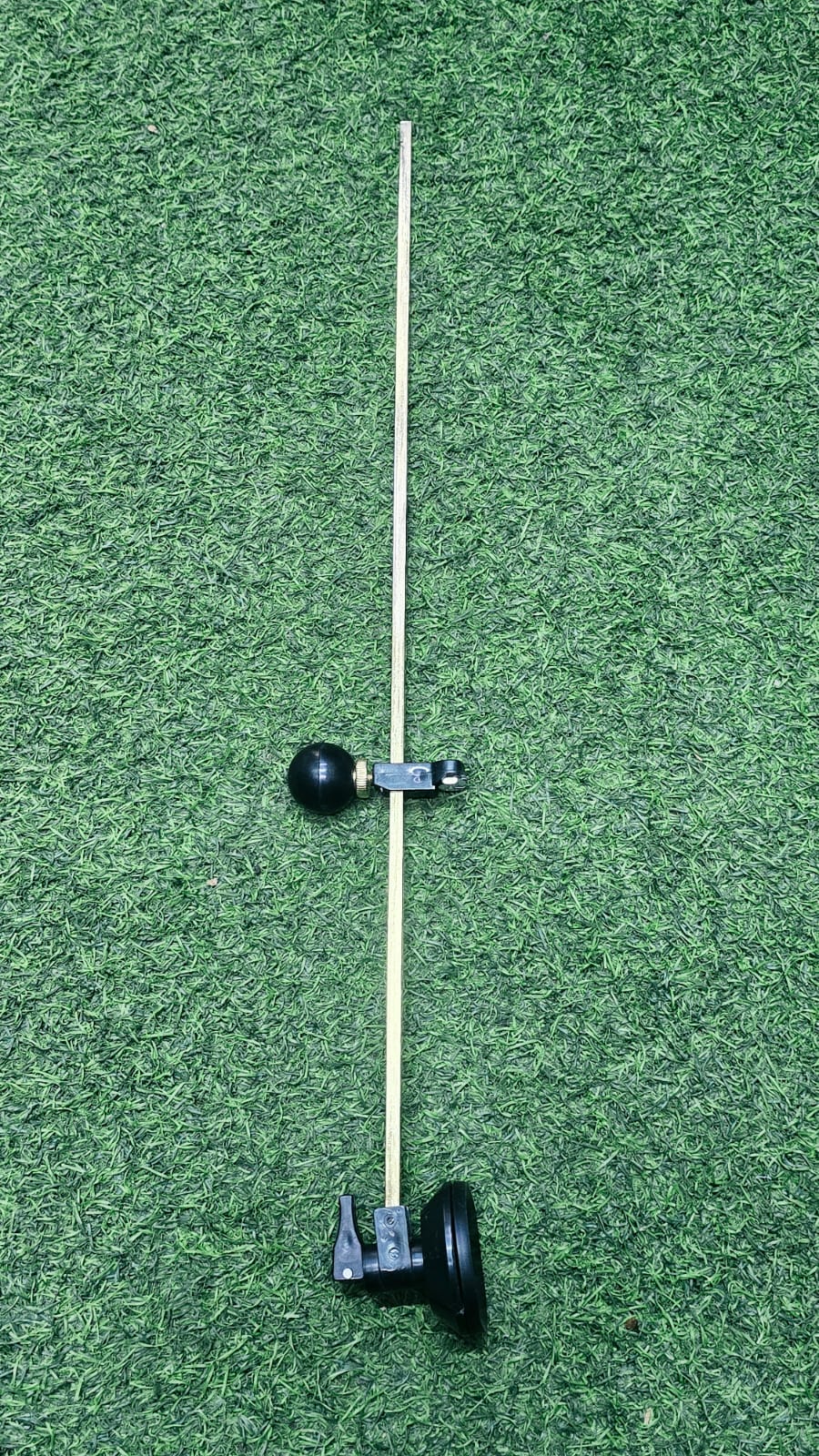
Description
This circular glass cutter uses an adjustable arm, a centre positioning mechanism and a cutting wheel to score a circular line on the glass surface. The glass is then separated along the scored line using the correct glass-breaking technique.
With a maximum cutting diameter of 100cm (1 metre) and a maximum cutting radius of 50cm, the tool is suitable for making large round glass pieces without using an electric glass-cutting machine.
Round Glass Cutter Specifications
| Specification | Details |
|---|---|
| Product Name | Round Glass Cutter |
| Tool Type | Manual Circular Glass Cutter |
| Maximum Cutting Diameter | 100cm / 1,000mm |
| Maximum Cutting Radius | 50cm / 500mm |
| Maximum Circle Size | 1 metre across |
| Cutting Mechanism | Glass scoring wheel |
| Adjustment | Adjustable radius arm |
| Centre Positioning | Suction cup or pivot mechanism, depending on model |
| Power Source | Manual, no electricity |
| Suitable Material | Compatible flat glass sheets |
| Main Applications | Round mirrors, glass tables and decorative glass |
| Intended Users | Glaziers, glass fabricators and furniture workshops |
The 100cm diameter and 50cm radius are the specified dimensions. The cutting-wheel material, glass thickness range, minimum cutting diameter and included accessories depend on the exact manufacturer.
Adjustable 50cm Cutting Radius
The main feature of this round glass cutter is its adjustable cutting arm.
The operator measures the required radius from the centre of the intended circle to its outer edge. The cutting wheel then travels around that centre point to produce a circular score.
A maximum radius of 50cm allows the tool to mark a circle measuring 100cm across.
For example, a round glass tabletop with a diameter of 80cm requires a radius setting of 40cm.
The arm must be securely locked before scoring to prevent the circle size from changing during operation.
100cm Maximum Cutting Diameter
A cutting diameter of 100cm makes this tool suitable for large decorative glass projects.
The maximum diameter is measured from one edge of the circle to the opposite edge, passing through the centre.
It does not mean the cutter can reach 100cm from the centre. Its maximum radius is 50cm.
The tool is designed for circular scoring rather than straight-line cutting.
Manual Glass Scoring Wheel
A circular glass cutter normally uses a small hardened cutting wheel to create a controlled score on the glass surface.
Depending on the model, the wheel may be made from tungsten carbide or another suitable hardened material.
The wheel does not cut completely through the glass. Instead, it creates a fine score that guides the glass during separation.
Correct scoring pressure, a clean glass surface and a suitable cutting wheel are important for producing a smooth circular edge.
Centre Positioning Mechanism
Many circular glass cutters use a suction cup to hold the centre of the tool against a smooth glass surface.
This allows the cutting arm to rotate around a fixed point.
Other models use a different pivot mechanism.
The centre must remain stable throughout the scoring process. Any movement can cause an uneven circle or a double score, increasing the risk of glass breakage.
For suction-mounted models, the glass must be clean, dry and suitable for reliable suction attachment.
Suitable Glass Thickness
The glass thickness that a circular cutter can handle depends on its cutting wheel and design.
For example, one 100cm circular cutter is advertised for glass thicknesses of 3mm to 10mm, while another is rated for flat glass up to 4mm thick.
This means the maximum diameter alone does not determine the glass thickness a cutter can handle.
| Glass Thickness | Common Application | Important Consideration |
|---|---|---|
| 3mm | Decorative glass and some mirrors | Requires gentle handling |
| 4mm | Mirrors and cabinet glass | Common for light decorative work |
| 5mm | Furniture and glazing projects | Check wheel compatibility |
| 6mm | Glass shelves and furniture | Requires controlled breaking |
| 8mm | Thicker glass panels | Use a cutter rated for the thickness |
| 10mm | Heavy glass applications | Specialist handling may be needed |
The exact glass thickness rating of the supplied tool should be confirmed before use.
Important: Ordinary manual scoring cutters are intended for suitable annealed glass. Fully tempered glass cannot normally be cut this way after tempering because it will shatter.
Applications of the Round Glass Cutter in Kenya
Round Glass Tabletops
The tool is suitable for preparing circular glass pieces for dining tables, coffee tables and decorative furniture.
Furniture makers can adjust the radius to match the required tabletop dimensions.
Circular Mirrors
Mirror fabricators can use the cutter to produce round mirrors for bathrooms, bedrooms, salons and commercial interiors.
Care must be taken to avoid damaging the reflective backing during cutting and finishing.
Interior Decoration
The cutter is useful for creating circular glass features used in furniture, wall decorations and custom display projects.
Glass Workshops
Glaziers and glass fabricators can use the adjustable arm to prepare repeated circular shapes without drawing each circle by hand.
Ventilation and Lighting Projects
The tool can help prepare circular glass openings or pieces for compatible ventilation and decorative lighting applications.
The surrounding glass must have enough material for safe scoring and breaking.
How to Use a 100cm Round Glass Cutter
-
Prepare the glass. Place an annealed glass sheet on a clean, flat, stable work surface. Wear safety glasses and cut-resistant gloves.
-
Measure the circle. Determine the required diameter and divide it by two to get the radius.
-
Mark the centre. Position the centre point so the entire circle fits inside the sheet, leaving extra glass around the edge for breaking.
-
Set the cutting radius. Adjust the arm to the required measurement and lock it firmly.
-
Secure the centre. Attach the suction cup or position the pivot mechanism according to the tool design.
-
Score the glass. Apply suitable glass-cutting oil if recommended. Rotate the cutting head smoothly with steady pressure, making one continuous score.
-
Separate the glass. Use appropriate glass-breaking techniques and tools to run the score and remove the surrounding waste glass.
-
Finish the edge. Smooth or polish sharp edges using suitable glass-finishing equipment before installation.
Glass-cutting guidance from the University of KwaZulu-Natal recommends leaving at least 2cm between the intended circle and the edge of the glass and using steady pressure when scoring.
Round Glass Cutter Diameter and Radius Guide
| Required Diameter | Radius Setting |
|---|---|
| 20cm | 10cm |
| 30cm | 15cm |
| 40cm | 20cm |
| 50cm | 25cm |
| 60cm | 30cm |
| 70cm | 35cm |
| 80cm | 40cm |
| 90cm | 45cm |
| 100cm | 50cm |
This table helps operators select the correct radius when preparing round glass pieces.
Benefits of the 100cm Round Glass Cutter
Large cutting range: Supports circular glass scoring up to 100cm in diameter.
Adjustable radius: Allows different circle sizes to be prepared using one tool.
Manual operation: Does not require electricity or batteries.
Accurate measurement: A marked adjustment arm helps improve consistency.
Suitable for workshops: Useful for furniture makers, glaziers and mirror fabricators.
Portable construction: Easier to move and store than large powered glass-cutting equipment.
Reduced material waste: Correct measurement and scoring can help reduce cutting errors.
Round Glass Cutter vs Straight Glass Cutter
| Feature | Round Glass Cutter | Straight Glass Cutter |
|---|---|---|
| Main Purpose | Circular scoring | Straight-line scoring |
| Cutting Shape | Round | Straight |
| Guide System | Adjustable radius arm | Ruler or straightedge |
| Common Applications | Mirrors and round tabletops | Windows and rectangular panels |
| Power Supply | Manual | Manual |
| Best For | Repeated circular shapes | General straight glass cutting |
A round glass cutter is useful when a workshop regularly prepares circular glass pieces. A straight cutter remains important for trimming sheets and preparing the surrounding material.
Round Glass Cutter Price in Kenya 2026
The price of a 100cm round glass cutter in Kenya depends on its construction, adjustment mechanism, cutting wheel and supplier.
A Kenyan online supplier, Skywave, advertises a generic 100cm compass glass cutter at KSh 1,900, reduced from KSh 2,500. This is a reference market price, not a confirmed price from Peter Machines and Spares.
Before buying, confirm whether the tool includes a suction cup, cutting wheel, radius markings and any replacement accessories.
How to Choose the Best Round Glass Cutter in Kenya
When buying a circular glass cutter, check the maximum cutting diameter first.
For large glass tables and mirrors, a 100cm diameter model with a 50cm radius offers a useful working range.
Next, check the minimum cutting diameter. Some comparable 100cm cutters are advertised with a cutting range starting at 6cm.
Choose a cutter with a stable centre mechanism and a clearly marked adjustment arm.
Also inspect the cutting wheel. A sharp, suitable wheel helps produce consistent scores and reduces the risk of unwanted cracks.
Finally, confirm the recommended glass thickness range and availability of replacement wheels.
Maintenance Tips for a Circular Glass Cutter
Clean the cutting wheel after every use to remove dust and glass particles.
Inspect the wheel for damage or uneven wear.
Keep the adjustment arm clean so it moves smoothly and locks correctly.
For suction-cup models, clean the rubber cup and protect it from sharp objects.
Use suitable glass-cutting lubricant where recommended.
Store the cutter in a dry place to prevent corrosion.
Replace damaged cutting wheels before attempting important glass projects.
Where to Buy a Round Glass Cutter in Kenya
Customers looking for a round glass cutter 100cm in Nairobi can enquire with Peter Machines and Spares about available glass-cutting tools and accessories.
Before ordering, confirm the maximum diameter, cutting radius, glass thickness compatibility, current price and availability.
Frequently Asked Questions
What is a round glass cutter?
A round glass cutter is a manual tool used to score circular shapes on flat glass using an adjustable arm and cutting wheel.
What is the maximum diameter of this round glass cutter?
The maximum cutting diameter is 100cm, equal to 1 metre.
What is the maximum radius?
The maximum cutting radius is 50cm, equal to 500mm.
Can a 100cm round glass cutter cut smaller circles?
Yes. The adjustable arm allows smaller circles to be scored, subject to the tool’s minimum diameter setting.
Can I use a round glass cutter on mirrors?
Yes. It can be used on suitable annealed mirror glass, with care to protect the mirror backing.
Can this tool cut tempered glass?
No. Fully tempered glass should not be cut using an ordinary manual glass cutter.
What glass thickness can a 100cm round glass cutter handle?
It depends on the model. Comparable cutters are advertised for ranges such as 3–10mm, while other versions are limited to thinner glass. Always confirm the exact tool rating.
Does a round glass cutter require electricity?
No. It operates manually.
Does the cutter cut all the way through the glass?
No. It scores the glass surface. The glass must then be separated carefully along the score line.
What is the price of a round glass cutter in Kenya?
A generic 100cm compass glass cutter is advertised online in Kenya at approximately KSh 1,900. Prices may vary by supplier.
Where can I buy a 100cm round glass cutter in Nairobi?
You can enquire with Peter Machines and Spares about a round glass cutter with a maximum diameter of 100cm and radius of 50cm, as well as other glass-cutting accessories.

Reviews
There are no reviews yet.