
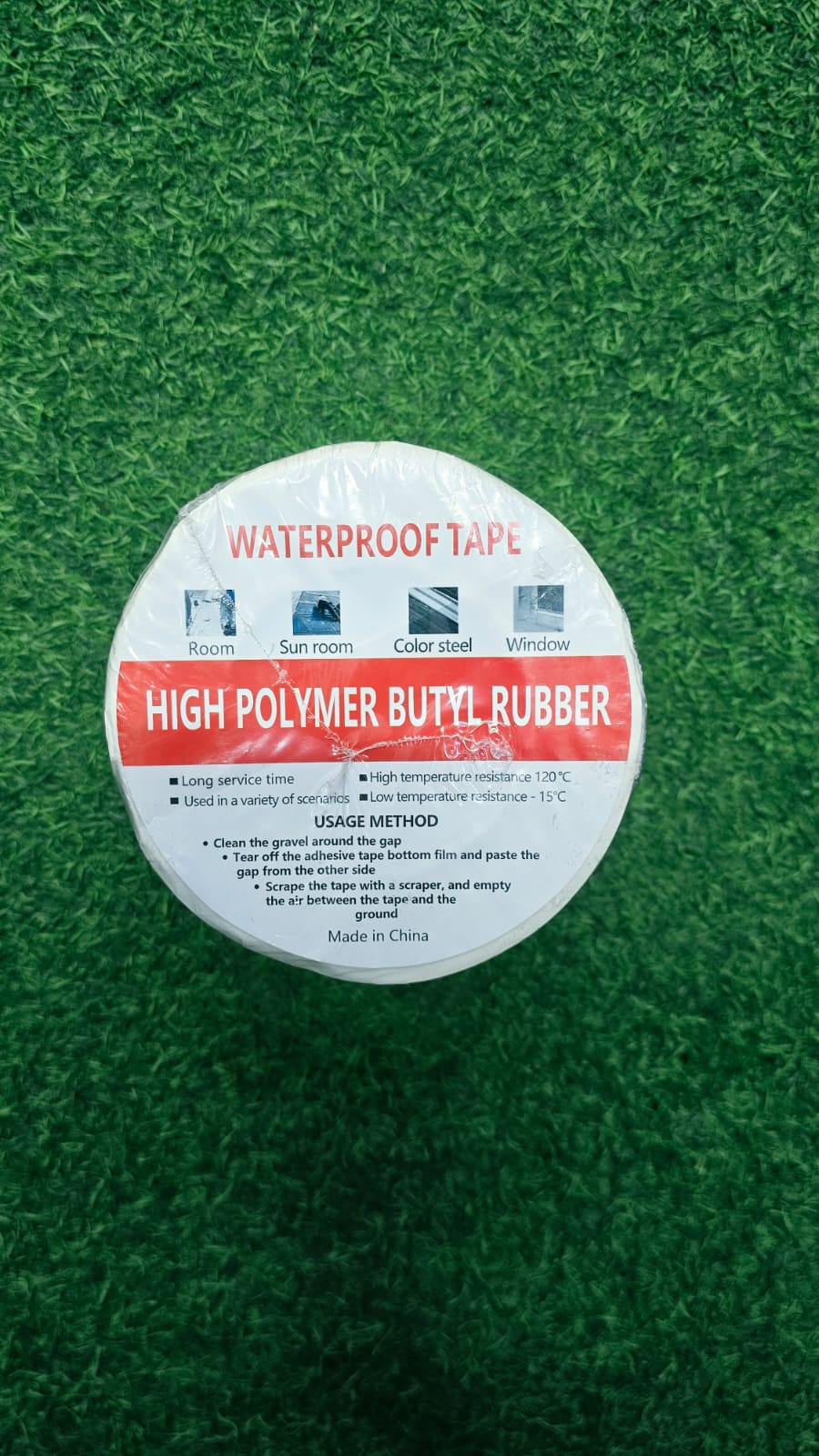
Description
Waterproofing agents are commonly used to repair leaking concrete water tanks, flat roofs, balconies, bathrooms, terraces and underground water reservoirs. They are useful for homeowners, plumbers, builders, contractors and property maintenance professionals across Kenya.
The correct waterproofing product depends on the surface, the cause of leakage and whether the repaired area will come into contact with drinking water.
Waterproofing Agent Specifications
| Feature | Description |
|---|---|
| Product Name | Waterproofing Agent |
| Product Category | Construction waterproofing material |
| Main Purpose | Preventing water penetration and leakage |
| Common Types | Liquid coating, cementitious slurry, waterproofing admixture |
| Applications | Water tanks, roofs, walls, bathrooms and balconies |
| Suitable Surfaces | Concrete, cement render and other approved surfaces |
| Application Methods | Brush, roller, trowel or mixing with mortar, depending on product |
| Water Resistance | Depends on product formulation |
| Colour | Depends on brand and formulation |
| Packaging | Varies by manufacturer |
| Drying and Curing | According to manufacturer’s instructions |
| Drinking Water Safety | Only approved products |
| Main Users | Plumbers, contractors, builders and homeowners |
These are general product-category specifications. The exact coverage, mixing ratio, packaging size and curing time must be confirmed from the waterproofing agent’s label.
How Does a Waterproofing Agent Work?
Waterproofing agents help prevent water from passing through building surfaces.
Different formulations work in different ways. Some create a protective coating on top of concrete, while others penetrate pores or improve the water resistance of cement and mortar.
For example, cement-based waterproofing mortars are designed to stop water infiltration while allowing water vapour to pass through the treated surface.Liquid waterproofing membranes create a protective barrier when applied correctly. Waterproofing admixtures are mixed into cement or concrete during construction to improve water resistance.
Waterproofing Agent for Leaking Water Tanks
Water tanks can develop leaks due to cracks, weak construction joints, damaged internal coatings or ageing concrete.
A suitable waterproofing agent can help seal water penetration and protect the tank surface.
For concrete tanks, cementitious waterproofing coatings are commonly used because they bond to prepared cement-based surfaces.
Some products are specifically approved for contact with drinking water. For example, Sika identifies certain waterproofing mortars and protective systems for potable-water tanks and reservoirs.Important: Never apply an ordinary roof sealant, bitumen coating or unknown chemical inside a drinking-water tank unless its manufacturer explicitly approves that use.
Waterproofing Agent for Leaking Roofs
Roof leakage is a common problem during heavy rainfall, especially on flat concrete roofs and terraces.
Water can enter through small cracks, weak joints, poorly sealed drainage points or damaged roof coverings.
A suitable waterproofing coating can help create a water-resistant layer across the roof surface.
However, the product must be suitable for the roofing material and expected weather exposure.
For roofs that experience temperature changes and movement, a flexible waterproofing membrane may be more suitable than a rigid cement-based coating.
Types of Waterproofing Agents in Kenya
Different waterproofing materials are designed for different applications.
| Waterproofing Type | Main Application | Important Feature |
|---|---|---|
| Cementitious waterproofing | Concrete tanks, bathrooms and masonry | Bonds to cement-based surfaces |
| Liquid waterproofing membrane | Flat roofs, terraces and balconies | Forms a protective surface coating |
| Waterproofing admixture | New concrete and mortar | Improves water resistance within the mix |
| Crystalline waterproofing | Concrete structures | Helps block water pathways within concrete |
| Joint sealant | Gaps and construction joints | Seals localised openings |
| Bituminous waterproofing | Selected roof and foundation systems | Provides a water-resistant barrier |
Sika Kenya lists cementitious mortars, waterproofing admixtures and other systems for tanks, reservoirs, wet areas and building structures.
Benefits of Waterproofing Agents
Helps Prevent Water Leakage
The main benefit is reducing water penetration through properly prepared and treated surfaces.
This can help protect concrete tanks, roofs and walls against recurring moisture problems.
Protects Building Structures
Water entering concrete can contribute to surface damage, corrosion of reinforcement and deterioration of finishes.
A correctly selected waterproofing system helps reduce these risks.
Reduces Maintenance Costs
Repairing water leakage early can prevent further damage to ceilings, paint, plaster and other building materials.
Suitable for Different Construction Projects
Waterproofing products are available for new construction and repair work, including tanks, bathrooms, balconies and roofs.
Easy Application for Suitable Products
Many cementitious waterproofing products can be applied using a brush or trowel after proper mixing and surface preparation.
However, some specialised waterproofing systems require professional installation.
How to Apply Waterproofing Agent on a Leaking Water Tank
Step 1: Empty and Inspect the Tank
Drain the tank completely before starting repairs.
Inspect the walls, floor, joints and pipe connections to identify the source of leakage.
For drinking-water tanks, use only repair materials approved for potable-water contact.
Step 2: Clean the Surface
Remove dirt, loose concrete, algae, grease and old coatings that could prevent adhesion.
The surface must be sound and properly prepared.
Step 3: Repair Cracks and Damaged Areas
Repair cracks, holes and weak joints using suitable materials before applying the main waterproofing layer.
Large structural cracks or moving joints may need specialised repair systems.
Step 4: Prepare the Waterproofing Agent
Mix the product according to its manufacturer’s instructions.
Some products are supplied ready for application, while others require mixing two components or adding a specified quantity of water.
Step 5: Apply the Waterproofing Layer
Use the recommended brush, roller or trowel to cover the required surfaces.
Apply the specified number of coats and observe the recommended interval between coats.
Step 6: Allow Proper Curing
Allow the waterproofing system to cure fully before refilling the tank.
For drinking-water tanks, follow the manufacturer’s instructions for curing, cleaning, flushing and returning the tank to service.
How to Waterproof a Leaking Concrete Roof
Waterproofing a roof begins with finding the actual source of leakage.
First, inspect the roof for cracks, standing water, damaged joints and blocked drainage outlets.
Clean the surface thoroughly and remove any loose material.
Repair visible cracks using compatible repair products. Apply a suitable primer where required by the waterproofing manufacturer.
Next, apply the waterproofing coating or membrane according to its technical instructions.
Pay special attention to corners, drainage points, parapet walls and pipe penetrations, as these are common leakage areas.
Allow the coating to dry and cure before exposing it to rain or foot traffic, according to the manufacturer’s requirements.
Waterproofing Agent vs Ordinary Cement
| Feature | Waterproofing Agent | Ordinary Cement |
|---|---|---|
| Main Purpose | Improve resistance to water penetration | Construction and surface finishing |
| Water Resistance | Depends on waterproofing formulation | Depends on concrete or mortar design |
| Leak Repair | Suitable products can form part of a repair system | Alone may not stop recurring leaks |
| Roof Application | Certain products are designed for roofs | Not normally a complete roof waterproofing system |
| Tank Application | Approved products can waterproof tanks | Requires correct mix and waterproofing design |
| Flexibility | Flexible grades are available | Generally rigid |
Waterproofing agents are not a replacement for sound construction. They work best when the underlying surface is stable and existing defects have been repaired.
How Much Waterproofing Agent Do You Need?
The amount required depends on the product’s coverage rate, the surface area and the number of coats.
For example, Sika Kenya lists a consumption of approximately 2.0 to 2.5kg/m² for its SikaSeal-105 waterproofing slurry, while other products have different application rates.For an example project covering 20m², at a product-specific consumption rate of 2kg/m², the calculated material requirement would be:
20m² × 2kg/m² = 40kg
This is only an illustration. Do not use this rate for an unidentified waterproofing agent. Follow the actual product’s technical data sheet and allow for surface roughness and wastage.
How to Choose the Best Waterproofing Agent in Kenya
Before buying a waterproofing agent, identify the surface that needs repair.
For concrete water tanks, choose a coating approved for water-retaining structures. If the tank stores drinking water, the product must have suitable potable-water approval.
For flat roofs, select a waterproofing system designed for outdoor exposure and the movement expected in the roof structure.
For newly constructed concrete tanks, a waterproofing admixture may help improve the water resistance of the concrete mix.
Sika Kenya, for example, provides waterproofing admixtures such as SikaControl-110 WT KE and Sika Plastocrete N KE for concrete structures, including water-retaining applications. These products are added during mixing and are not direct substitutes for a coating applied to an existing leak.Common Waterproofing Mistakes to Avoid
-
Applying waterproofing over dirty or loose concrete.
-
Using a rigid coating over active structural cracks.
-
Applying ordinary roof sealant inside drinking-water tanks.
-
Ignoring leaking joints and pipe connections.
-
Adding too much water during mixing.
-
Applying fewer coats than the manufacturer recommends.
-
Refilling a tank before the coating has fully cured.
-
Using a product on a surface for which it is not approved.
-
Failing to correct roof drainage problems.
Correct surface preparation and product selection are just as important as the waterproofing material itself.
Where to Buy Waterproofing Agent in Kenya
For waterproofing materials used on leaking roofs, concrete tanks and other construction surfaces, customers can enquire with Peter Machines and Spares about available waterproofing products and accessories.
Before purchasing, confirm the exact product brand, packaging size, recommended applications, coverage rate and suitability for the intended surface.
Frequently Asked Questions
What is a waterproofing agent?
A waterproofing agent is a material used to reduce or prevent water penetration through suitable surfaces such as concrete, roofs, walls and water tanks.
Can waterproofing agent stop a leaking water tank?
Yes. A suitable waterproofing system can stop leakage caused by certain cracks, pores and surface defects. Structural damage or moving joints may require additional repairs.
Can I use waterproofing agent on a leaking roof?
Yes. Roof waterproofing products can help seal leaks on suitable roof surfaces when applied correctly.
Is waterproofing agent safe for drinking-water tanks?
Only products specifically approved for drinking-water contact should be used inside potable-water tanks.
Can waterproofing agent be mixed with cement?
Some waterproofing admixtures are designed to be mixed into cement, mortar or concrete. Other waterproofing products are applied as surface coatings and should not be mixed with cement unless the manufacturer instructs you to do so.
How many coats of waterproofing agent are needed?
The number of coats depends on the product. Many coating systems require multiple coats, but the correct number and thickness must follow the manufacturer’s instructions.
Can waterproofing agent repair large cracks?
Not always. Large, structural or moving cracks usually require specialised repair before the waterproofing system is applied.
How long does waterproofing agent take to dry?
Drying and curing times vary depending on the formulation, temperature, humidity and coating thickness. Always follow the product label.
Can waterproofing agent be applied during rain?
Most waterproofing coatings require suitable dry-weather conditions during application and initial curing. Check the manufacturer’s weather requirements before starting.
Where can I buy waterproofing agent in Nairobi?
You can enquire with Peter Machines and Spares about available waterproofing products for concrete tanks, roofs, bathrooms and other building surfaces. Confirm the exact product specifications and availability before ordering.
Reviews
There are no reviews yet.