
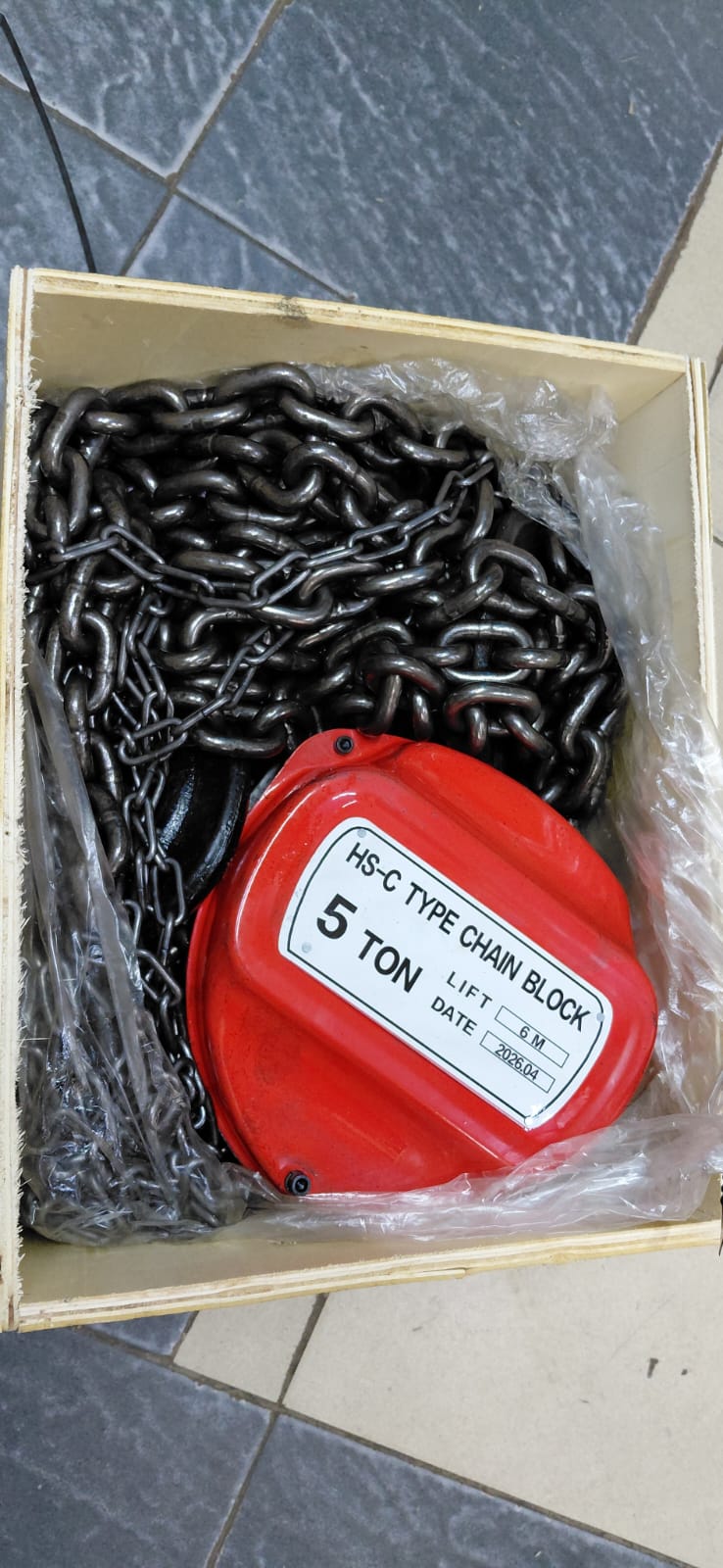
Description
Also known as a 5 ton manual chain hoist, chain pulley block or chain block and tackle, this equipment uses a hand-operated chain and gear system to lift heavy loads without electricity.
It is a practical choice for mechanics, contractors, fabricators, warehouse operators and machinery installers in Kenya who need a reliable lifting solution.
5 Tonne Chain Block 6m Specifications
| Specification | Details |
|---|---|
| Product Name | 5 Tonne Chain Block |
| Equipment Type | Manual Chain Hoist |
| Rated Lifting Capacity | 5 tonnes / 5,000kg |
| Maximum Lifting Height | 6 metres |
| Approximate Lift in Feet | 19.7 feet |
| Operation | Manual hand chain |
| Power Source | No electricity required |
| Lifting Mechanism | Mechanical gear system |
| Load Holding | Mechanical load brake |
| Mounting | Overhead rated lifting point |
| Main Applications | Construction, workshops, warehouses and machinery installation |
| Suitable Environment | Indoor and suitable outdoor lifting work |
The 5,000kg lifting capacity and 6m lift are the specified features of this product. Details such as chain diameter, product weight, number of chain falls, hook dimensions and certification depend on the manufacturer.
For comparison, documented 5-tonne chain blocks commonly use high-strength steel load chains, mechanical brakes and forged hooks
Heavy-Duty 5,000kg Lifting Capacity
The main advantage of the 5 tonne chain block is its ability to lift loads weighing up to 5,000kg when correctly installed and operated.
This capacity makes it suitable for heavy machinery, steel structures, industrial equipment and other loads that are too heavy for manual handling.
The lifting capacity is also called the Working Load Limit (WLL).
A chain block rated at 5 tonnes must never be used to lift a load heavier than its marked working load limit.
The supporting beam, lifting point, shackles and other rigging equipment must also be rated for the load.
6-Metre Lifting Height
This chain block has a 6m lifting height, which is approximately 19.7 feet.
The longer lifting range makes it useful for workshops with high ceilings, industrial buildings, elevated platforms and construction projects.
It can help operators raise equipment from ground level to an elevated working position.
However, the 6m lift does not mean that the chain block can fit into a space exactly 6m high. Additional space is needed for the hoist body, hooks, rigging and load.
For example, a documented 5-tonne, 6-metre chain block has a minimum hook-to-hook distance of approximately 570mm. This measurement varies by model.
Manual Operation Without Electricity
The 5 tonne manual chain hoist does not require an electric motor, battery, generator or fuel.
Instead, the operator pulls a hand chain that drives the internal gear system.
The gears multiply the applied force, allowing a person to lift loads much heavier than they could raise directly.
This makes manual chain blocks useful in remote construction sites, farms, workshops and areas without reliable electricity.
A comparable 5-tonne chain block is designed specifically for manual operation and includes a gear system for controlled lifting.
High-Strength Steel Load Chain
The load chain is one of the most important parts of a chain block.
It carries the weight of the load while the internal lifting mechanism moves the chain through the hoist.
Quality chain blocks use hardened alloy steel chains designed to withstand heavy lifting forces.
For reference, several documented 5-tonne chain hoists use 10mm load chains, while some designs use two chain falls to distribute the load.
These are common specifications, not confirmed measurements for this particular chain block. Always check the manufacturer’s label before ordering replacement chains.
Mechanical Load Brake for Controlled Lifting
A quality manual chain block uses a mechanical load brake to help control the load during lifting and lowering.
The brake is designed to hold the suspended load when the operator stops pulling the hand chain.
Many industrial chain blocks use a Weston-type mechanical brake system.
The brake must be inspected and maintained according to the manufacturer’s instructions.
Never rely on a damaged or poorly maintained chain block to hold a heavy load.
Strong Upper and Lower Hooks
Manual chain blocks normally have two main hooks.
The upper hook attaches the chain block to a suitable overhead lifting point, while the lower hook connects to the load or lifting sling.
Many 5-tonne models use forged steel hooks with safety latches. These help keep correctly fitted lifting accessories from slipping out of the hook opening
The hooks should be inspected before every lifting operation.
Do not use a chain block if the hook is bent, cracked, excessively worn or missing its required safety latch.
Applications of a 5 Tonne Chain Block in Kenya
The 5 tonne chain block 6m is useful in several industries.
Construction Sites
Contractors can use it to lift suitable steel components, structural materials and machinery during construction.
It is particularly useful where an approved lifting point is available and an electric hoist is not practical.
Mechanical Workshops
Heavy vehicle workshops and industrial repair centres can use the chain block to remove or position engines, gearboxes and other heavy components.
The lifting arrangement must match the equipment’s weight and approved lifting points.
Warehouses and Factories
Warehouses and factories use manual hoists to raise and position machinery, equipment and heavy components.
The chain block can also be used with a separately rated beam trolley where horizontal movement is required.
Machinery Installation
During installation of generators, industrial pumps, compressors and processing machines, a chain block can help position equipment accurately.
The slow, controlled manual lifting action is useful when aligning machinery with mounting points.
Agricultural and Industrial Projects
Large farms, mills and processing facilities may use chain blocks when servicing or installing heavy equipment.
A manual hoist is especially useful in locations where electricity is unavailable.
5 Tonne Chain Block 3m vs 6m
| Feature | 5 Tonne 3m | 5 Tonne 6m |
|---|---|---|
| Lifting Capacity | 5,000kg | 5,000kg |
| Lifting Height | 3 metres | 6 metres |
| Operation | Manual | Manual |
| Electricity | Not required | Not required |
| Best Application | Lower lifting heights | Taller lifting areas |
| Chain Length | Shorter | Longer |
| Portability | Generally easier | May be heavier |
The 6m version is suitable where more lifting height is required.
However, a longer lifting chain does not increase the maximum lifting capacity. Both versions remain limited to their rated 5,000kg working load.
5 Tonne Chain Block Price in Kenya 2026
The price of a 5 tonne chain block in Kenya depends on its brand, lifting height, construction, certification and supplier.
Current online listings provide the following price examples.
| Product | Advertised Price |
|---|---|
| 5 Tonne Chain Block, 3m | KSh 25,000 |
| 5 Tonne Chain Block, 6m, TOOLSTOWN | KSh 27,500 |
| 5 Tonne Chain Block, 6m, Jiji listing | KSh 16,999 |
The 3m listing is from Bonetech, while the 6m prices are advertised by TOOLSTOWN and a Jiji seller. These are reference prices, not a confirmed selling price for Peter Machines and Spares.
When comparing prices, confirm whether the chain block has a visible capacity label, inspection records, manufacturer documentation and the required lifting certification.
Benefits of the 5 Tonne Chain Block 6m
-
5,000kg lifting capacity: Suitable for heavy industrial lifting within the rated limit.
-
6m lifting height: Useful for taller workshops and elevated lifting tasks.
-
No electricity required: Can operate at construction sites and remote locations.
-
Controlled manual lifting: Allows careful positioning of heavy equipment.
-
Versatile applications: Suitable for factories, workshops, warehouses and construction.
-
Portable design: Can be moved between approved lifting points when properly handled.
-
Low running costs: Does not require fuel or electrical power.
How to Use a 5 Tonne Chain Block Safely
Before lifting any load, inspect the chain block for visible damage.
Check the hooks, safety latches, chains, housing and brake operation.
Attach the upper hook to a properly rated lifting point. The supporting structure must be capable of carrying the full load and any additional forces involved.
Connect the lower hook to suitable lifting slings or the approved lifting point on the equipment.
Take up the slack slowly and lift the load slightly to confirm that it is balanced and secure.
Continue lifting smoothly without sudden pulling or jerking.
Never stand or work underneath a suspended load. Do not use a chain block to lift people or drag loads sideways.
The applicable lifting-equipment standard BS EN 13157 covers hand-powered cranes and lifting equipment, including manual chain hoists. Some 5-tonne, 6m products are sold with test certificates showing conformity to this standard.
How to Choose the Best Chain Block in Kenya
When buying a chain block, start by checking the weight of the heaviest load you intend to lift.
Choose a hoist with a working load limit that is sufficient for the job.
Next, measure the required lifting height. A 6m chain block is suitable when a 3m version does not provide enough lifting distance.
Check the available headroom, mounting arrangement and whether a beam trolley is needed.
You should also examine the quality of the chain, hooks, brake and internal gear system.
For workplace lifting, request suitable inspection or test documentation and confirm that the equipment meets applicable safety requirements.
Maintenance Tips for a 5 Tonne Chain Block
Proper maintenance helps extend the life of a manual chain hoist.
Clean dirt and dust from the chain and exterior housing after use.
Inspect the load chain for stretching, corrosion, cracks and damaged links.
Lubricate the chain and other permitted components according to the manufacturer’s instructions. Keep lubricants away from brake friction surfaces unless the manufacturer specifically directs otherwise.
Store the chain block in a dry location when not in use.
Do not repair damaged lifting chains by welding them. Replace defective components using manufacturer-approved parts.
Any chain block showing signs of overload, brake failure or structural damage should be removed from service until inspected by a competent person.
Frequently Asked Questions
What is a 5 tonne chain block?
A 5 tonne chain block is a manual lifting device designed to raise and lower loads weighing up to 5,000kg using a hand-operated chain and gear mechanism.
How high can a 5 tonne by 6m chain block lift?
It has a rated lifting height of 6 metres, approximately 19.7 feet, subject to sufficient installation clearance.
Does a 5 tonne chain block require electricity?
No. It operates manually using a hand chain and mechanical gear system.
What is the price of a 5 tonne chain block in Kenya?
Advertised prices for 5-tonne, 6m chain blocks include approximately KSh 16,999 to KSh 27,500, depending on the supplier and product. Prices can change.Can a 5 tonne chain block lift an engine?
Yes, provided the engine and lifting accessories are within the rated capacity and the chain block is attached to a properly rated overhead support.
Can I use a chain block for construction work?
Yes. It can lift suitable construction materials and equipment when used with approved rigging and a properly rated lifting point.
What is the difference between a chain block and an electric hoist?
A chain block uses manual pulling force, while an electric hoist uses a motor. Manual chain blocks are useful where electricity is unavailable or lifting is occasional.
Can I lift more than 5,000kg with a 5 tonne chain block?
No. Never exceed the manufacturer’s 5,000kg working load limit.
Does a chain block have a brake?
Industrial manual chain blocks normally include a mechanical load brake to hold and control loads. Confirm that the specific product has a functioning brake before use.
Where can I buy a 5 tonne chain block in Kenya?
You can enquire about the 5 tonne chain block 6m from Peter Machines and Spares, which supplies machinery and equipment in Kenya. Confirm the current price, availability and product certification before purchasing.


Reviews
There are no reviews yet.